Showing posts with label Fashion. Show all posts

Thursday, 10 December 2015

WHY DIVERSITY IN FASHION IS MORE IMPORTANT THAN EVER

Never in recent years has society lived in such fear. As the profile of terrorist organisation ISIS grows in the UK (mainly thanks to fuel added to the fire by mainstream media), so does the trend for racist outbursts and attacks, many of which have gone viral; see this Muslim woman getting called an “ISIS bitch”, or this woman in a hijab being pushed in front of a London Underground train by an onlooker. With Trump calling for a ban on Muslims trying to enter America and Cameron approving airstrikes on the already-wartorn streets of Syria, modern Muslims are suffering the consequences of terrorism in the form of a rise in xeneophobia. Over 12% of the population of London are Muslim, so why are they still being dehumanised?

A disclaimer before we enter the body of this article; I am not claiming that fashion can eradicate xenophobia. However, it‘s common knowledge that everybody creates a first impression based on the first 30 seconds of interaction and, therefore, it is logical to argue that image and appearance play a large part. We subconsciously scan people to make up our mind them; we compare them to what is ‘normal’, and our ideas of normality are, whether we like it or not, influenced by what we see in the media. Fashion‘s role in the mainstream media, and its role in creating the advertisements and billboards fed to us daily, means that fashion now has more of a responsibility than ever to endorse beauty of all sizes, ethnicities and religions. So far, H&M are the only high-street chain to use a hijab-wearing Muslim, enlisting model Mariah Idrissi as one of the faces of their “Close The Loop” campaign. Despite the fact that she was one of many stars in a video which featured amputee models, Sikh males and plus-size models, it was Idrissi whose appearance garnered the most column inches – an indication in itself that a hijabi model is still an anomaly in an industry that claims to celebrate diversity.

Idrissi in H&M’s ‘Close the Loop’ campaign

In an interview with Fusion, Idrissi spoke openly of her experiences on set (she credits the cameraman and cast as being “very respectful”) and indicates that she was skeptical when initially asked to take the job, even going as far as to clarify that the bookers knew she wore a hijab; “it always feels like women who wear hijab are ignored when it comes to fashion… Our style, in a way, hasn’t really mattered, so it’s amazing that a brand that is big has recognized the way we wear hijab.” In reality, Muslim women are an enormous demographic for luxury retailers, so it seems bizarre that they remain absent from campaigns.

It’s fair to argue that fashion’s fascination with sex is one of the main reasons for the lack of Muslim models. Despite becoming one of the most iconic supermodels of the 1990s, Yasmeen Ghauri has spoken openly about the ways in which her profession are at odds with her strict Muslim upbringing. Speaking candidly in a fashion documentary she talks about how Muslims aren’t supposed to dance or show skin, and also that her job puts her Pakistani father, an Islamic priest, in jeopardy. American Apparel’s infamous “Made in Bangladesh” campaign also courted controversy last year by featuring Bangladeshi Muslim Maks (who chose to hide her last name) topless, accompanied by a blurb which again pursued the narrative that she had to distance herself from her religion before choosing to model.
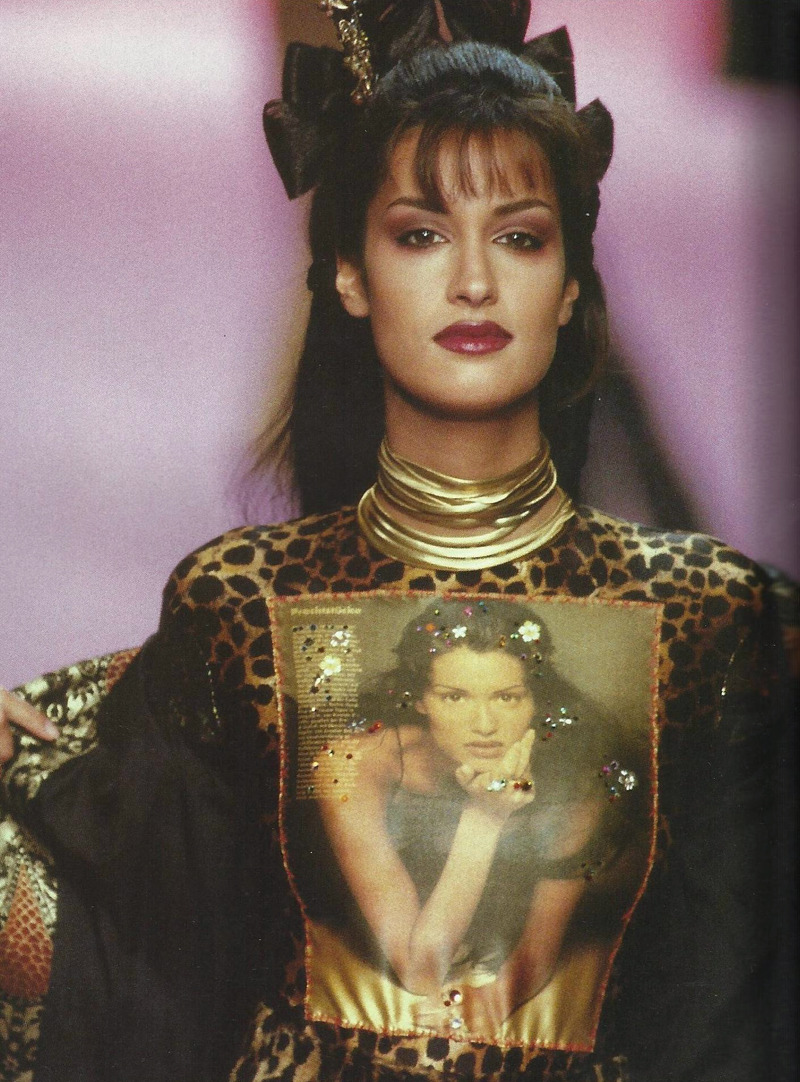
Yasmeen Ghauri for Christian Lacroix FW1994

Regardless of the strict guidelines around the religion of Islam, it is quickly becoming imperative that fashion finds a way to broaden its stance on diversity and shine the spotlight on Muslim women. A lack of integration is usually the result of a lack of visibility; as the hijab remains unacknowledged by the mainstream media, it becomes increasingly pushed away from the aesthetic being normalised on billboards. Fashion is often cited as a visual reflection of society – one look at Vivienne Westwood’s political designs during the punk era is enough to prove that fashion and politics can engage successfully. It only makes sense that the glossy images fed to us by mainstream retailers reflect the multicultural society that 21st-century Britain has become. Hijabi women need a voice - a voice which silences Nationalists claiming Islam as a violent religion and which diversifies the common narrative that all women of Islam are repressed. No, fashion will never succeed in eradicating the wave of reactionary racism in the wake of terrorist attacks,. However, it can remind us all that the Muslim men and women we see on the street (many of whom are second or third-generation and therefore of British nationality) absolutely must not be stereotyped or villified due to the actions of a minority extremists.

Thursday, 15 October 2015

CHANEL X SAATCHI

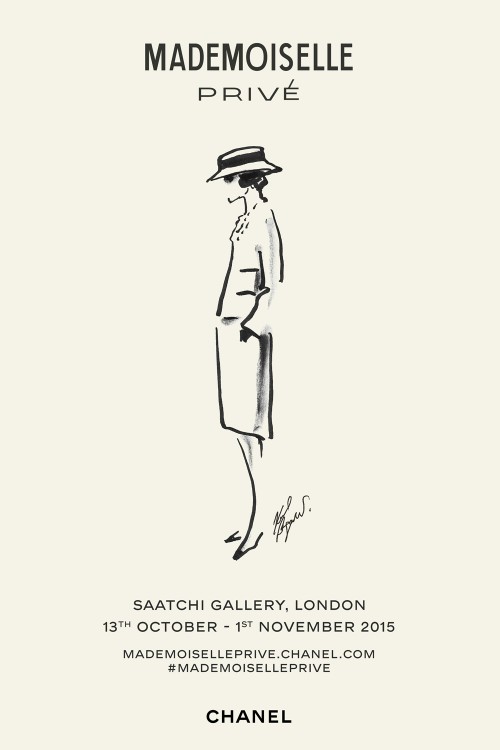
Regardless of how much you care about fashion, there’s a 99% chance you’re familiar with Coco Chanel. You’re also probably familiar with Chanel as the behemoth brand that dominates Bond Street with its tweed two-pieces and interlocking C’s. A French fashion house steeped in history and largely credited for establishing the chic Parisian uniform that we have all come to know and love, Chanel is beginning to leave its roots and look firmly toward the future. At least this is the impression you get as you enter the Saatchi Gallery, guided by legions of guards present to limit the crowds. As you enter the gallery you are treated to a recreation of Coco’s own garden divided into three sections, all of which are beautifully decorated with vast swathes of flora including, Chanel’s own favourite, the camellia. This stunning yet quaint entrance soon makes way for modernity as visitors are reminded that the exhibition comes fully-furnished with free Wifi and an accompanying app, which promises to act as a faithful companion there to uncover new nuggets of information as you peruse the installations. 

Mademoiselle Privé exhibition poster

Monday, 15 December 2014

WHY FASHION LOVES WOMEN

If there was one word that gained traction more than any other this year, it was ‘feminism’. Whether we credit Beyonce, Emma Watson or mere social unrest, the discussion of women’s rights has become ubiquitous, sparking debates on everything from breastfeeding and abortion to slut-shaming and dyed pubes. If we follow this train of thought, it seems natural that fashion would come into the equation somewhere, raising the question; where does fashion really stand on feminism?


Without doubt the most publicised example of fashion’s response to this question came courtesy of notorious provocateur Karl Lagerfeld, a man known as much for his designs as he is for clumsily calling Adele fat. His latest Chanel show ended with a protest; a gang of models stormed ‘Boulevard Chanel’ brandishing placards emblazoned with “Women’s rights are more than alright!” and “History is Her Story” - a ‘feminist’ statement which simultaneously excited the fashion crowd (style.com REALLY loved it) and infuriated the media in general. Journalists began trawling through interview archives and gleefully pulling clumsy quotes from Lagerfeld himself which indicate that he is definitely not ‘feminist’ in the traditional sense. He argues that sweatpants are a sign of defeat and that fat women should be, unequivocally, banned from the runway - hardly an activist for female body confidence. Articles argued that Lagerfeld ‘appropriated’ feminism and that his hypocritical stance was indicative of the fashion industry as a whole, all of which is valid criticism. However, if we also consider that Chanel’s previous collection was staged in a makeshift supermarket and ended with editors wrestling for selfies with Chanel-branded sweetcorn (another clumsy commentary - this time on capitalism), it seems fair to argue that we should perhaps accept Karl’s stance on anything as tongue-in-cheek.

Thursday, 16 October 2014

IS FASHION ENTERTAINMENT?

Is fashion entertainment? That is the question on everyone’s lips this year as the dust begins to settle on the biggest month in the fashion calendar. Throughout the cycle of SS15 shows, one debate in particular has been raging with several of the industry’s journalistic elite weighing on social media to contribute their views. One of the most publicised tweets comes courtesy of the Independent’s fashion editor Alexander Fury, who claimed that “Fashion is not entertainment. It is art. This is a business and these are trade shows, not a three-ring circus”. His statement supports that of the renowned journalist Suzy Menkes, who penned a 2013 article entitled ‘The Circus of Fashion’ as a response to the rising presence of fashion bloggers in the show tents. In this article, Menkes paints a picture of attention-starved fashionistas armed with camera phones, lingering outside show locations ready to snap selfies with the well-known attendees of the season’s biggest shows. She also forecasts the ‘fast-fashion’ ideology that is slowly becoming ubiquitous, an ideology embodied by Jeremy Scott’s debut collection at Moschino which was available to purchase from the minute the show went viral. Scott tapped into today’s consumer society in a genius way by incorporating accessories such as smart-phone covers into a collection priced from £35 upwards. By adjusting price-points, he made high fashion accessible to those without the budget and subsequently re-opened the debate as to whether fashion should be commercial or exclusive.

Gareth Pugh's SS15 'Presentation'
Fury’s initial comment that fashion shows are created for commerce is arguably negated by designers such as Gareth Pugh and Thom Browne, both of which staged fairytale presentations for Spring/Summer 2015. Browne served us one of the week’s highlights with his dreamy avant-garde garden-party, based around the tale of six sisters that designed their own dress code for the week. It’s hard to argue that fashion isn’t entertainment when we see models dressed in fantasy tailoring teetering around the runway’s perimeter in stilts, or fantastical bird-cage headpieces walking the runway. Some of fashion’s greatest designers have been showmen in their own rights – think Galliano’s legendary ‘Diorent Express’ collection, or McQueen’s paint-gun finale at his No.13 collection. It’s not unusual for collections to feature showpieces which never become available to buy; instead they are created for artistic purposes and featured in elaborate runway presentations or loaned to museums for display. Whilst the commercial element of fashion is always the most important, it’s hard to deny that entertainment also plays a part.

Saturday, 13 September 2014

SS15 HIGHLIGHTS [SO FAR!]

As the dust began to settle around New York Fashion Week, its audience began to question whether or not this was the most innovative NYFW in recent history. New York is renowned for its emphasis on urban chic - luxe sportswear and high-end separates are usually the order of the day, leaving the melodrama for Paris. This season, however, things were markedly different thanks to a number of young designers ignoring traditional runway presentations in favour of something a little more interesting. Opening Ceremony, for example, cast stars such as Dakota Fanning and Rashida Jones to create a Fashion Week satire; one which raised eyebrows among the industry for its exaggerated depictions of fashion clichés. Elsewhere, Gareth Pugh moved his show from its usual Parisian setting to the Big Apple and Thom Browne created a typically fantastical setting for his S/S15 garden party. This season was packed with truly memorable shows and indicated that some designers are looking to move away from the 'trade show' mentality that has recently plagued the industry. We already have pre-collections, resort collections and diffusion lines to provide the commercial basics that keep the industry thriving - the runway is a platform for spectacle and it seems that, for the first time in a while, designers are ready to embrace it.

Wednesday, 13 August 2014

NOW & THEN

There are fewer issues discussed more frequently in the menswear industry than that of androgyny. Ever since Jean Paul Gaultier chose male model Tanel Bedrossiantz as the face of his A/W 1987 womenswear collection, the fashion industry has been bending gender roles and rewriting the rules of masculinity. It’s widely-known that, in fashion, the concept of androgyny is nothing new - Women have been wearing traditionally ‘male’ clothes for decades, ever since Coco made it OK to wear trousers and Yves introduced ‘Le Smoking’. No headlines are made when designers include masculine tailoring or boyfriend shirts in womenswear collections, and a simple Google search of ‘androgyny’ brings up countless images of stylish women dressed in their boyfriends’ clothes. Women such as Grace Jones and Tilda Swinton made it fashionable to take the lines of gender and blur them to the extreme; arguably the only well-known male equivalent to these two women is David Bowie, who famously indulged his androgynous side through a series of personas such as The Thin White Duke and Ziggy Stardust. In summary, it seems that women now have complete freedom when exploring the realms of androgyny and, now, the new school of innovative London designers are working their hardest to secure this same sartorial freedom for men worldwide.

Grace Jones - a pioneer of andr

Monday, 16 June 2014

CARPE NOCTEM

One of the most fundamental requirements to building a successful business is branding. It is often said that an image can only become iconic if it is repeated often enough (occasionally with subtle variations) that it burns into your retinas and lingers long after the curtains close. At this point, the image becomes associated with the brand - think Madonna and her infamous JPG cone bra, or Grace Jones and her iconic flat-top. With this collection, it's clear that Ada & Nik are creating with the intent to cement their signature aesthetic; as for their iconic intentions, the 'What Would James Dean Do?' tees are proof enough that they had at least one icon in mind when crafting this collection.


Tuesday, 3 June 2014

GRADUATE FASHION WEEK

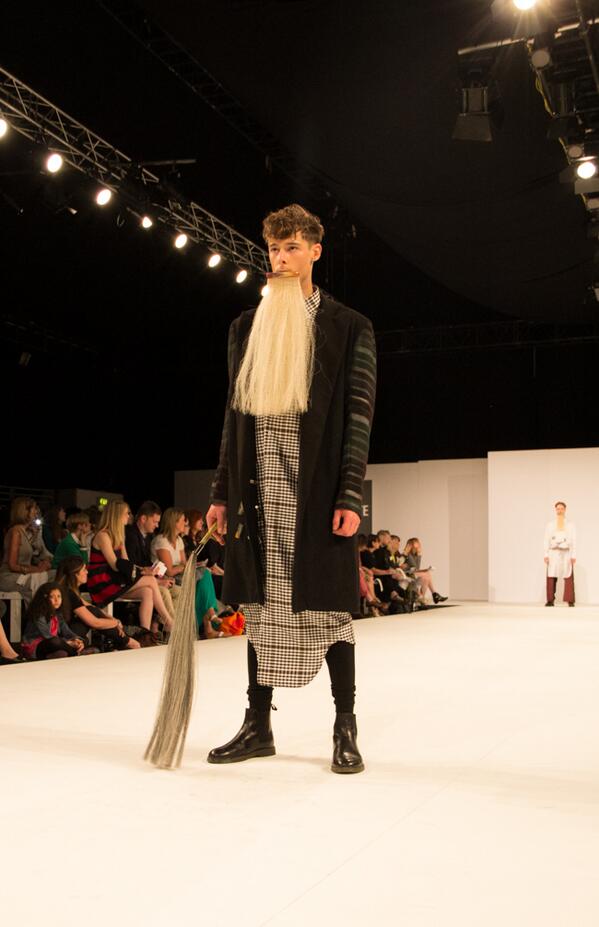
Thanks to extortionate tuition fees and the increasingly uncertain job prospects that come with a degree, more and more youngsters are choosing to eschew the traditional route of university. Instead, they're throwing themselves into unpaid internships and mentorship schemes to work their way up the fashion ladder; a perfectly legitimate way to gain industry experience. This year, Graduate Fashion Week has arrived at the perfect time - it serves as a reminder of Britain's youngest prospects doing things the traditional way and finally showcasing the fruits of their three-year labour. In an industry built on prestige, GFW was a welcome reminder that the one thing the fashion industry really needs right now is youth. Yesterday was a personal highlight of mine as Birmingham City University graduates showcased their collections, and it was a moment that, despite the months of Instagram previews, nobody could have predicted. The menswear shows in particular were an example of forward-thinking; waterproof footwear, white lace trousers and knee-length metallic blazers were amongst the show's highlights, displaying impressive versatility in eager young minds. The pictures below are just a preview... YouTube links will be coming shortly, as will a selection of interviews with the thirsty young designers preparing to make their mark on today's fashion landscape.

Claire Latham, Birmingham City University


Lauren Lake, Kingston University


Charlotte Bruton, Birmingham City University


Shauni Douglas, Edinburgh College of Art

Wednesday, 23 April 2014

MENSWEAR MANIFESTO

Men like clothes just as much as women. Try shopping for menswear in almost any city, though, and it hardly feels like the case. For example, a recent trip to Leeds' Corn Exchange yielded the discovery of at least 10 'vintage' or 'boutique' shops for women, yet the only two that stocked menswear contained a few leather jackets and a selection of logo T-shirts. The other shops stocked handmade jewellery, upcycled outfits and a sartorial feast which ranged from wearable to bonkers - all exclusively for women. This was even more frustrating considering that the day began with a trip to Harvey Nichols which stocked some mouthwateringly brilliant pieces; Raf Simon's amazing holographic high-tops and Givenchy's eye-catching prints were proof that menswear clearly offers a wider range for those with a fat bank balance. This was further re-iterated by a trip to Vivienne Westwood and the opportunity to play dress-up in brilliantly charismatic clothes that I would love to wear but, alas, cannot afford. I began to think about the rapid evolution of the menswear industry and the progress being made; why is this progress not reflected on the high street?

With London Collections: Men gradually becoming one of fashion's most talked about events and menswear designers announcing bigger profit than ever, it is clear there is an enormous gap in the market for young men that aren't afraid to take sartorial risks. These men are important - fashion is a reflection of society, and today's technologically-minded society is driven by youth. A brief look at the most recent Fashion Weeks reveals that the most interesting names in menswear tend to be either unknown or underrated - whereas big brands like Prada and Dolce & Gabbana stick to their commercial codes, fresh faces are busy redefining the way that we dress. This post is a manifesto - a call to arms for these young designers to kickstart the new New Wave of Fashion. From now on, the focus of this blog will be shifted to new designers, and used as a platform to promote these innovators by looking at their working process and exploring the ideas behind their collections. It will also be a place to explore the styling elements of menswear, used to stifle the immediate fear that springs to mind whenever we hear words such as 'skort', 'PVC' or 'pastel' and show that the wearability of trends is defined by the individual, not the designer. It's  an exploration of the finest minds in the industry, an advertisement for the commercial possibilities of left-field menswear and an endorsement of the young talent making a marriage between avant-garde sensibilities and commercial revenue a dream slowly becoming reality. 

Tuesday, 22 April 2014

#SELFIE

This week I was presented with the double-edged luxury of travelling. There were the pros - the exploration of new and exciting places (well, York and Leeds..), the reassuring sights of familiar faces and the knowledge that I had done more with my time at home than park myself in front of Come Dine With Me re-runs. As is to be expected, there were also cons - a lack of legroom, a hungover plane ride and, surprisingly, an infuriating American that insisted on holding up the boarding process by nagging me to take multiple pictures of her on the plane steps. Now, for those of you that don't know me, I would like to clarify that I generally try to be as nice as possible to strangers and so, in the interest of not being a complete dick (damn British manners), I agreed to take one photo of the woman in question, despite the fact we were amongst the last three people to board. I did, however, draw the line at taking another photo of her because apparently the plane wasn't visible enough and her eyes were too squinty. I politely shoved her phone back into her hand, stepped past her and sashayed into my cramped window seat feeling quietly murderous. 

Monday, 7 April 2014

TOO BLACK FOR BALMAIN?

They say that there are two sides to every story. The story here is the story of Ajak Deng, a highly-successful and undeniably gorgeous Sudanese model who has been making waves on the fashion circuit for several seasons. However, despite her flawless skin, winning smile and model figure, Deng was apparently rejected by Balmain for (in her words) ‘being too black’. In a series of expletive-ridden tweets, (one of which was a rather brilliant “Fuck you and fuck you. Balmain.”) Deng also implied that this kind of mentality is still commonplace in the fashion industry, hinting that ‘a lot of other black models would rather kiss ass than be honest’. This statement was marvellously re-iterated when Balmain, unsurprisingly, refused to comment on the issue. The only way to reach a justified conclusion is to hear both sides of the story – so why is the fashion industry still silent on such an important issue?
Ajak Deng for i-D magazine

Wednesday, 2 April 2014

THE KIMYE EPIDEMIC

Whether you love her or hate her, everybody has an opinion on Anna Wintour. The same can be said of showbiz' 'golden couple du jour', KimYe - a bizarre fusion of rap's greatest megalomaniac and a reality TV 'phenomenon' with an arse apparently insured for $21 million. Therefore, it came as no surprise that Wintour's decision to feature the couple on the cover of Vogue caused debate, controversy and, unsurprisingly, outrage. A hilarious onslaught of vitriol was aired all over social media, with hastags ranging from #GODBLESSKIMYE to #FUCKVOGUE (inevitably used as the caption to an Instagram picture of the magazine in the bin), with many threatening to boycott the magazine and cancel their subscriptions. Perhaps the best reaction of all came courtesy of fashion royalty, Naomi Campbell - her refusal to comment (followed by hysterical laughter and the assurance that she can't comment as she is a 'fashion model') spoke louder than any well-rehearsed soundbite, and it seemed to confirm what everybody was thinking - that fashion is 'above' reality TV.


Tuesday, 25 March 2014

G.U.Y

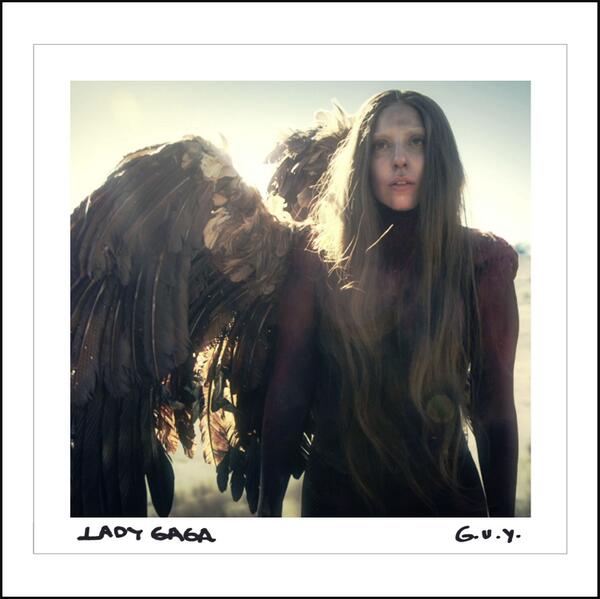
It’s no real secret that the fashion and music industries are, now more than over, heavily dependent on one other. Take the recent slew of bi-annual Fashion Weeks and look at their headlines; Katy Perry pissed everyone off by being drastically late to Jeremy Scott’s Moschino debut, Rihanna divided her time between a trolley dash in the aisles of the Chanel supermarket and countless Instagram snaps with Olivier Rousteing and, finally, Versace’s couture collection gained more column inches from Lady Gaga’s appearance than any of the looks shown on the runway. The love between Gaga and Donatella is clearly mutual; ever since Donatella loaned out archive pieces from Gianni’s vaults to accompany Lady Gaga’s ‘”Edge of Glory” music video, the friendship has resulted in the popstar fronting Versace’s latest campaign as well as devoting a song on her ‘ARTPOP’ album to Donatella’s unattainable wealth, sass and general brilliance. It seems natural that Gaga’s recently-released G.U.Y video seems, via the use of a floor-length platinum wig, a visual extension of the advertisement campaign and more like a fashion film than any traditional music video. The Lady is known for her outfits; here are five of the best.


Thursday, 23 January 2014

LE NOUVEAU COUTURE

Watching the recent Couture shows which took place in various locations across Paris this week, it was clear that an epidemic had spread throughout the fashion world. Couture is the art of using only the handiwork of hundreds and thousands of skilled artisans to create garments which are one-of-a-kind and inimitable. The price tags are eye-watering, meaning that only a select troupe of exclusive women are invited to purchase the clothing – the ‘Couture Club’, as they are often called. These women look to couturiers for painstaking detail, exquisite craftsmanship and, more than anything, a tribute to extravagance and luxury at its finest. As for us mere mortals, we see couture as sartorial proof of artistic brilliance. The spectacle that accompanies the shows helps transport us momentarily from our daily lives into a world of pure, ethereal fantasy which is as mesmerising as it is unattainable. However, this season something was different.

Chanel Couture S/S 2014, taken from Dazed Digital

Monday, 20 January 2014

THE DARK WOLF

In an industry already saturated with designers new and old, nothing is more important than a distinctive aesthetic. Nobody, perhaps, understands this better than London design duo Ada + Nik, whose Autumn/Winter 2014 collection ‘The Dark Wolf’ premiered just two weeks ago at London Collections: Men. After both establishing themselves as prominent figures in the fashion industry (Ada has her own womenswear and couture collections, Nik has modelled for Jean Paul Gaultier as well as writing for a host of publications), the pair decided to combine their individual talents to create their own line of menswear. Combining Ada’s design background with Nik’s strong aesthetic has resulted in runaway success for the new duo, so I was understandably excited to be granted access to their Paris showroom today to delve deeper into the collection and its inspirations.


Wednesday, 15 January 2014

MILAN FASHION WEEK [MENSWEAR]

There are two things that Italy continue to do better than any other country, particularly in terms of fashion. The first of these two things is tradition - evident in the classically-tailored pieces shown at the likes of Emporio Armani as well as in the rich heritage of Italian houses such as Fendi and Prada. The second is luxury; only not in the way that we know it. Many Brits associate luxury with high-end basics such as a cashmere sweater or an expensive suit, but the Italian brand of luxury is a much flashier incarnation. It is emblemised by ornate colour palettes, oversized logos and heavy embellishment and best represented by the decadent looks of Dolce & Gabbana. Sometimes fashion is best when it toes the line of bad taste - fashion personalities Anna Dello Russo and Donatella Versace are renowned for their carefree approach to fashion and their penchant for excess. These two women embody the more-is-more approach to luxury adopted by the Italians, adding a touch of character to the industry with their infectious personalities and schizophrenic outfit choices, reminding us that fashion and fun are a marriage made in heaven.

Backstage at D&G A/W 2014, by Lea Colombo

Monday, 13 January 2014

MEN IN HEELS?

As the dust began to settle around LC:M, it became clear that one designer had succeeded more than most in burning his distinctive aesthetic onto the retinas of a mainstream audience. With his chunky patent platforms, lycra-tight knitwear and bucket-shaped handbags, JW Anderson had cemented his reputation as the King of Androgyny by subverting the 'slutty secretary' stereotype that we've all come to know as female. Hot on his heels, Italian provocateur Donatella Versace showed her horny Western collection, chock full of Italian studs in backless chaps and gold-studded codpieces. It was like the Village People had headed to the desert for a pimped-up shootout. If the 'androgynous' debate is one that is referenced too obviously in menswear, this latest round of shows looks set to drag up the age-old argument; can men REALLY look good in skirts? 

Image - Versace A/W '14, taken from Dazed Digital.

Friday, 10 January 2014

LONDON COLLECTIONS: MEN

It used to be the case that, when I heard the word 'menswear', my mind would jump straight to outdated clichés of a well-groomed thirty-something, sporting nothing but a James Dean haircut and a well-tailored suit. Luckily, menswear has changed recently and, although there will always be space for a well-tailored suit, young designers are using their imagination and skills to push the boundaries and redefine the wardrobe of the modern male. This experimentality and will to play with the fashion formula is never more evident than in London, the capital of eccentricity and individuality. More specifically, it was evident in the recent LCM shows which collectively unearthed a feast of sartorial delights for men worldwide who are becoming bored by tradition. In this post, I have picked my five personal favourites from the host of talent on show - some of them are on the list due to a cohesive aesthetic and stand-out pieces, whereas others are on the list for subverting tradition and creating enough controversy to fuel debate and keep the ball moving forward.

Wednesday, 8 January 2014

ANGELS & DEMONS

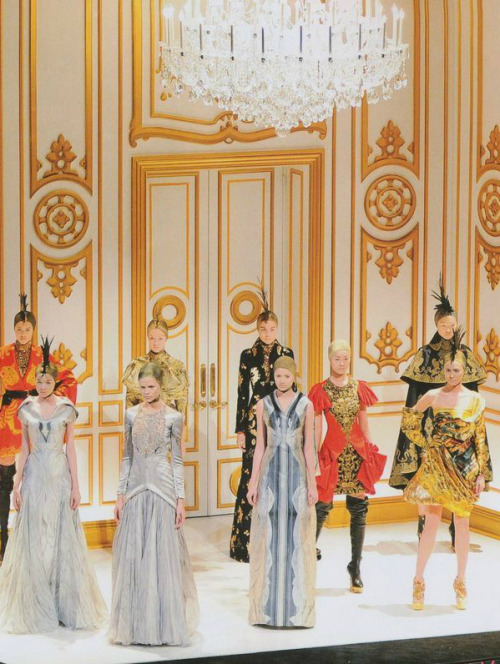
There is dispute as to whether it is this collection (video link here) or ‘Plato’s Atlantis’ that should be classed as McQueen’s last – although S/S 2010 was the last that he completed, this posthumous collection was around 80% complete at the time of the designer’s death. I have chosen to take a further look at it both for reasons of posterity and also because the pieces revealed a more elegant side to the designer’s palette, taking classic works of art and superimposing them onto a series of breathtakingly beautiful garments. It’s perhaps ironic that McQueen became truly fascinated with religion and its concepts of the afterlife just months before his suicide, and although the posthumous collection has no official title it is known as ‘Angels and Demons’ – a title which fits the collection perfectly.

PLATO'S ATLANTIS

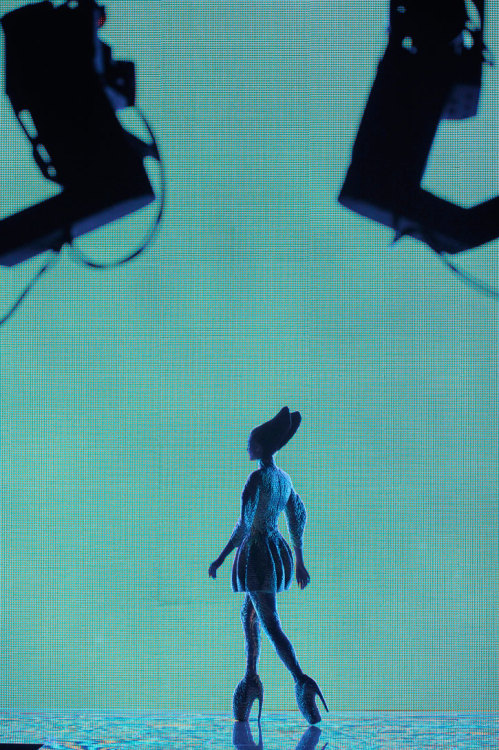
After symbolically collating the last 15 years of his work with his ‘Horn of Plenty’ collection, ‘Plato’s Atlantis’ (which can be seen in full here) saw Alexander McQueen draw a line under his past and move firmly towards the future. Utilising technology to its full potential, the designer announced a collaboration with renowned fashion photographer Nick Knight which would see the entire show streamed live on the photographer’s influential website ‘ShowStudio’ – a move which would take the notoriously exclusive world of the fashion show and smash it apart, broadcasting this usually private event to an audience of millions. It was only when international superstar Lady Gaga tweeted that the show would also debut her new single that excitement reached fever pitch, leading to the servers crashing immediately from overwhelming demand and representing a new peak in the designer’s career.