One of the most intriguing things about fashion
is that it is a word with no real definition. A quick search in the Oxford
English Dictionary defines fashion as “a popular or latest style of clothing,
hair, decoration or behaviour” – an implication that it is something which is
transient as opposed to permanent. However, this is a definition which has been
skewed by endless pop-culture re-interpretations, ranging from fashion shows
through to fashion blogs. Google ‘fashion blog’ and the results vary wildly –
from teen girls modelling their latest Forever 21 ‘hauls’ to in-depth reviews
of ‘90s couture and essays on fashion history, these blogs often have little to
do with ‘fashion’s’ dictionary definition.
Showing posts with label comme des garçons. Show all posts
Saturday, 8 February 2014
Monday, 30 September 2013
COMME DES GARCONS S/S 2014
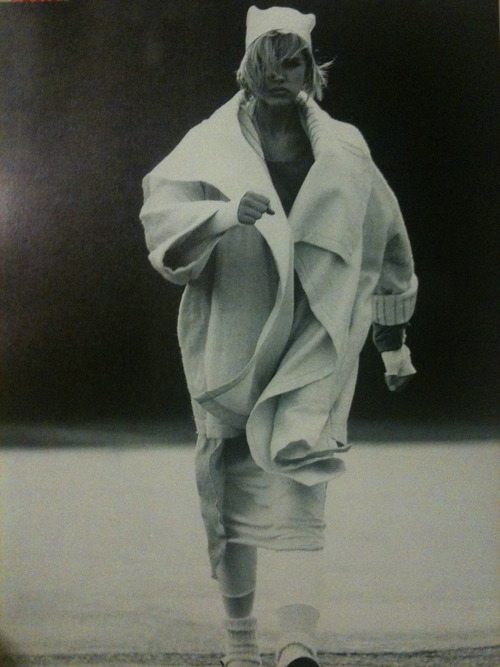
As profits become more and more important and the fashion world becomes more and more dependent on huge financial backers, it is a true relief to see that Rei Kawakubo has maintained her distinctly 'fuck you' attitude to fashion design. Never one to adhere to the formulas of wearability or the form of the female silhouette, this season Kawakubo recognised her own status as fashion icon and pored over her own archive with an experimental eye, taking her signature codes and fusing them together to create amalgamations of some of her greatest work.
Monday, 29 July 2013
DESTROY
The concept of deconstruction in the world of high fashion is an interesting one. High fashion tends to conjure up the image of luxury - of flattering hemlines, high-quality materials and a general aura of glamour. For garments to be labelled and sold as high-end fashion, there has to be a sense that the buyer is getting value for their money, which is why it is so surprising that one of fashion's most powerful houses is based principally upon concept as opposed to commercial viability.
Ever since establishing her place in the fashion industry with her 'Hiroshima Chic' aesthetic, Rei Kawakubo has continued to push the boundaries of commercial clothing with her own sombre brand of beauty. Choosing to use black for the majority of her collections immediately set her aside from her flashier peers, but it was the use of deconstruction within Comme des Garçons 'Destroy' collection that truly divided critics.
Thursday, 18 July 2013
BODY MEETS DRESS, DRESS MEETS BODY
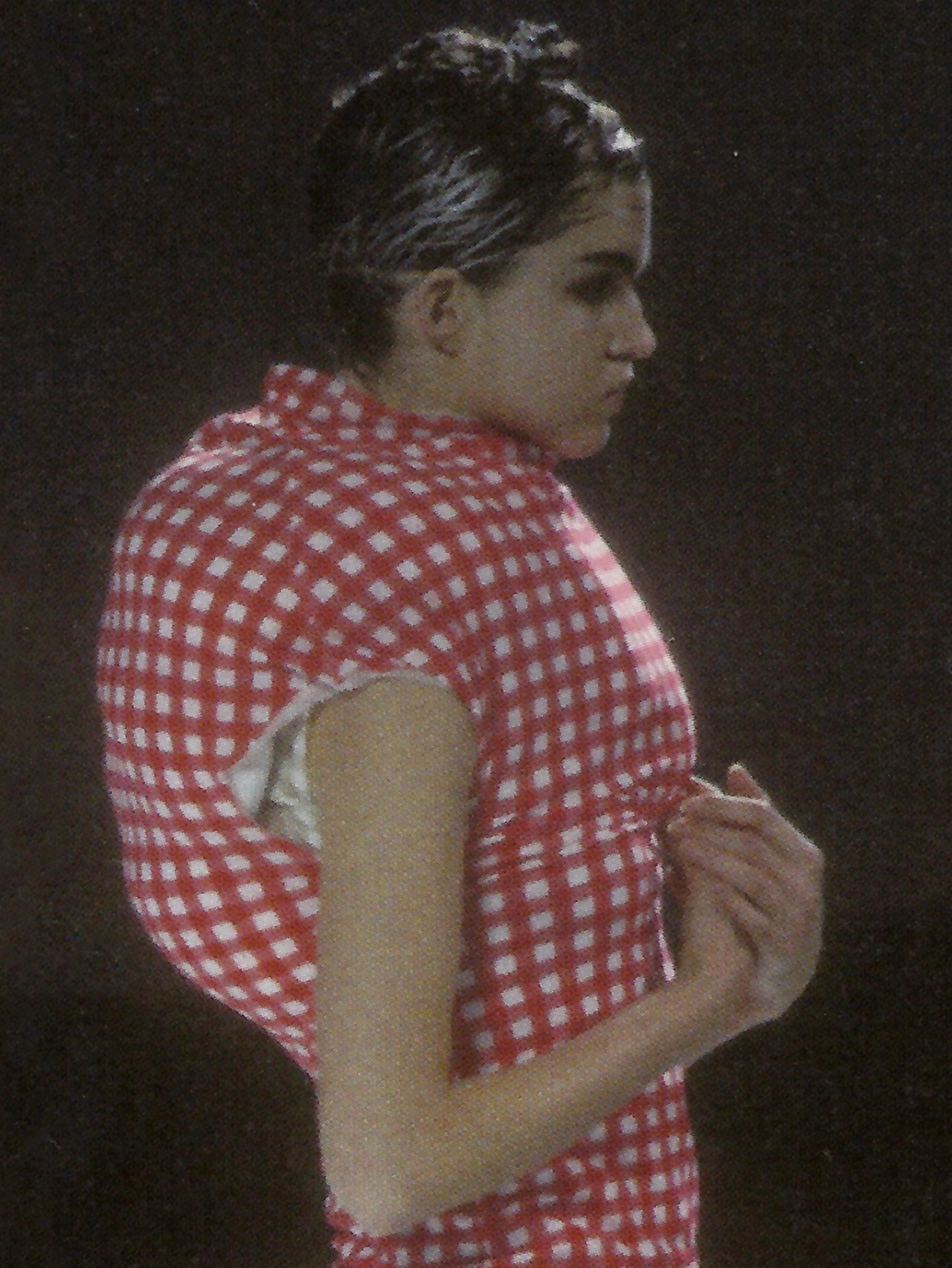
Whilst many designers become hugely successful in their own right, very few manage to create collections that are conceptual and avant-garde whilst also being selling enough of the collection to sustan a lengthy career. Rei Kawakubo, however, is now in her fourth decade in the fashion industry and her house, Comme des Garçons continues to thrive. Renowned for her desire to push the boundaries of wearability and challenge modern perceptions of "fashion" Kawakubo has created many iconic collections but this, her Spring/Summer 1997 collection, is arguably the most iconic.
The collection, entitled "Body Meets Dress, Dress Meets Body", was based on the concept of a woman being physically attached to her burdens. The dresses in the collection were disfigured with wads of padding which led many to criticise Kawakubo for deliberately creating a collection that was deemed to be unflattering and "anti-feminine". In addition, there was debate as to what the "burdens" were supposed to be - in some cases the padding was shaped like a baby in a sling, an obvious commentary on the weight of motherhood, but in other cases the lumps were attached to the hip, leaving an ambiguous meaning.
Thursday, 23 May 2013
MODERN AVANT-GARDE
Fashion is widely regarded as an industry designed to make women (and men) look beautiful. Clothes are designed to be sold, and for this reason the principal role of a designer is to design clothes that flatter the figure, accentuating the silhouette and generally creating a garment which is both attractive and wearable. In this post I will attempt to look at how important it is for modern fashion to be wearable - although the recession is tightening its grip on industry in general, the fashion industry continues to thrive. The question I wish to explore is whether or not there is room for more avant-garde design in the commercial sphere - the main goal is to sell the collections, meaning that designers choosing to explore less practical visions are now taking a larger risk than ever.
In terms of mainstream fashion, the truly iconic houses such as YSL, Chanel and Versace all rose to fame by selling their own interpretation of beauty. Although each designer had their own niche aesthetic (whilst Versace specialised in sexy, bold looks, YSL favoured elegance whereas Chanel glamourised androgyny), each designer created garments which sold well because they maintained a level of wearability which meant that any woman could wear the clothes and look (as well as feel) great.
In modern society, the enormous presence of the media means that it is now more difficult than ever to maintain a sense of mystery in fashion. One of the greatest aspects of the work of designers such as Kawakubo and Margiela was that the designers rarely made public appearances or gave interviews, leaving the spectators to unravel the story of the collection. Sometimes the message was obvious - Kawakubo's 'White Drama' collection, for example, was a clear commentary on the restraints of marriage, a theme which she had previously explored in her 'Broken Brides' collection. However, other elements are open to interpretation; Kawakubo is renowned for her intellectual take on fashion, often choosing to create garments that aren't traditionally pretty in order to challenge perception. Kawakubo's F/W 2012 collection was comprised entirely of dresses which were designed to look 2D, shown in a variation of bold prints & colours. Lady Gaga later chose to wear one of the designs (now known as 'The Fat Dress') as a response to criticism of her weight - the exaggerated proportions of the dress render the dress almost unwearable, yet Kawakubo herself has given no explanation as to her decision to create a collection of dresses that are essentially impossible to wear.
Read more
| Hussein Chalayan - one of fashion's most avant-garde designers |
| Glamour in the 50s - Chanel |
In modern society, the enormous presence of the media means that it is now more difficult than ever to maintain a sense of mystery in fashion. One of the greatest aspects of the work of designers such as Kawakubo and Margiela was that the designers rarely made public appearances or gave interviews, leaving the spectators to unravel the story of the collection. Sometimes the message was obvious - Kawakubo's 'White Drama' collection, for example, was a clear commentary on the restraints of marriage, a theme which she had previously explored in her 'Broken Brides' collection. However, other elements are open to interpretation; Kawakubo is renowned for her intellectual take on fashion, often choosing to create garments that aren't traditionally pretty in order to challenge perception. Kawakubo's F/W 2012 collection was comprised entirely of dresses which were designed to look 2D, shown in a variation of bold prints & colours. Lady Gaga later chose to wear one of the designs (now known as 'The Fat Dress') as a response to criticism of her weight - the exaggerated proportions of the dress render the dress almost unwearable, yet Kawakubo herself has given no explanation as to her decision to create a collection of dresses that are essentially impossible to wear.
![]() |
| Comme Des Garçons A/W 2012 |
Thursday, 18 April 2013
WHITE DRAMA
The always-enigmatic Rei Kawakubo has established a reputation for ignoring trends and making her own rules, continually crafting collections with a strong message and a stronger aesthetic that transport the viewer into the world of Comme Des Garçons. Perhaps the greatest recent example of her seamless blend of high-concept and high-fashion was her S/S 2012 collection, White Drama, a collection so beautiful that it is already subject of an exhibition at the prestigious Cité de la Mode et du Design in Paris.
Although the clothes themselves were a vision of ethereality, the collection was designed to portray a more sinister view on the modern-day institution of marriage. Each dress was based on the traditional mould of a wedding dress - some were fabricated from layers of laser-cut lace, whereas others featured huge peplums and makeshift crinolines made from futuristic fabrics which shrouded the model entirely. The women's heads were often encased in stiff white masks which obscured the face completely, whilst other models wore headpieces of intricate organza flowers for a more delicate take on the concept.
Tuesday, 22 May 2012
Collection: Comme des Garçons Spring/Summer 2012
Comme des garçons - the fashion house founded by the legendary rei kawabuko back in 1969 - has long been associated with the breaking of boundaries and social commentary since its humble beginnings. In her latest collection, Rei has presented a controversial collection based on feminist ideology and, more importantly, the institution of marriage.
"White Drama" is certainly what Rei managed to create with her collection of intricate gowns made from sumptious silk and frothy tulle, created to replicate classic wedding dresses with a subversive twist.The "brides" often had their face covered with beautiful lace veils, their limbs drowned by oversized jackets with distinctive curved silhouettes and floral detailling or their wrists bound by lace gloves and silk ribbon, referencing the subversive nature of the woman in history.
In creating this collection, Rei has proven once again that she has the rare ability to create breathtaking garments which manage to be oversized yet still flattering, dramatic but not overly flamboyant, whilst still managing to add subtle hints of controversy; enough to make sure that this collection will likely remain one of her most-discussed for years to come.
"White Drama" is certainly what Rei managed to create with her collection of intricate gowns made from sumptious silk and frothy tulle, created to replicate classic wedding dresses with a subversive twist.The "brides" often had their face covered with beautiful lace veils, their limbs drowned by oversized jackets with distinctive curved silhouettes and floral detailling or their wrists bound by lace gloves and silk ribbon, referencing the subversive nature of the woman in history.
Subscribe to:
Posts (Atom)